
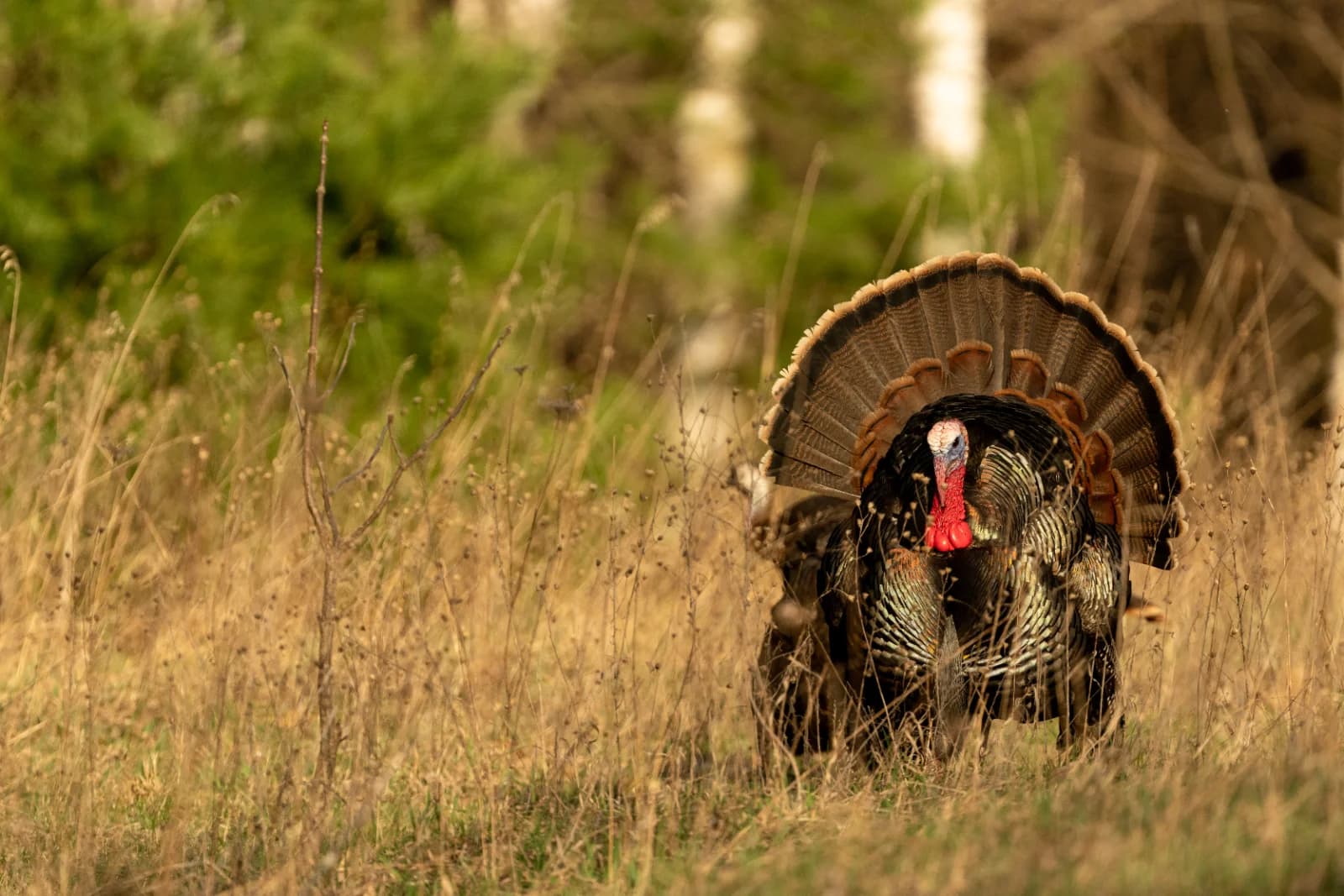
Turkey Hunting on a Budget: How to Build a Full Setup from Used Gear
Spring turkey season is one of the most accessible entry points in hunting. You don’t need thousands of dollars in optics, you don’t need to draw a tag through a lottery, and in most states a license costs under $30. But if you walk into a sporting goods store and start building a turkey setup from scratch, the bill adds up fast. A quality turkey vest alone can run $150. A set of decoys is another $100 to $200. Calls, face masks, gloves, camo, and shotgun accessories stack on top of that.
Here’s the thing: almost none of that gear needs to be bought new. Turkey hunting equipment holds its value well on the used market, and because so many hunters accumulate gear they barely use, the supply of lightly used turkey stuff is enormous. You can build a complete, high-quality turkey setup for roughly half of what it would cost at retail.
Let’s walk through everything you need and what you should expect to pay secondhand.
Calls: The Most Important Gear You Own
Turkey calls are where hunts are won or lost. The good news is that the three types of calls every turkey hunter should carry are all affordable, even new. But buying used gets you into premium options for pennies.
Diaphragm calls are mouth-operated reeds that produce realistic yelps, clucks, and purrs. New, they run $5 to $15 each. These are personal-use items, so most hunters buy them new. Budget $15 for a three-pack from Primos or Woodhaven.
Box calls are the easiest call for beginners to master. A new Lynch Fool Proof or Primos Ol’ Betsy runs $25 to $40. Used, you can find premium box calls from Lynch, Woodhaven, or custom makers for $15 to $25. The wood ages well and many hunters argue that a broken-in box call actually sounds better than a new one.
Pot calls (slate or glass surface with a striker) produce the most realistic soft talk for close-range work. New, a quality pot call and striker set runs $30 to $60. Used, expect $15 to $35. Check that the surface isn’t cracked and bring fine sandpaper to recondition it before your hunt.
Budget for calls: $45 to $75 used vs. $70 to $115 new.
Decoys: Fooling a Tom Without Breaking the Bank
A basic turkey decoy spread includes a hen and a jake or strutter. Avian-X, Dave Smith, and Montana Decoy make the most popular options. New, a quality hen and jake combo runs $100 to $250. Used decoys in good condition sell for $50 to $120, and because decoys are inherently durable (they’re designed to sit in fields and take weather), buying secondhand is a no-brainer.
Look for decoys with intact paint and no major cracks. Fading is cosmetic and turkeys don’t care. If the stake is missing, a replacement costs $5 at any hardware store. Collapsible decoys from Montana Decoy are particularly good buys used because they pack flat and show minimal wear even after heavy use.
Budget for decoys: $50 to $120 used vs. $100 to $250 new.
Turkey Vest: Your Mobile Command Center
A turkey vest is part seat cushion, part gear organizer, part camouflage system. It holds your calls, shells, water, snacks, strikers, decoy stakes, and everything else you need for a day in the woods. Good turkey vests from ALPS OutdoorZ, Nomad, or Sitka include a built-in fold-out seat pad that saves you from sitting on cold, wet ground for hours.
New, quality turkey vests range from $80 to $200. The Sitka Equinox Turkey Vest retails for $199. Used, you’ll find vests from the same brands for $40 to $100. Check that zippers work, the seat pad foam hasn’t compressed flat, and the game pouch in the back is intact. Everything else is cosmetic.
Budget for vest: $40 to $100 used vs. $80 to $200 new.
Camo Clothing: Full Concealment Matters
Turkeys have exceptional eyesight. Unlike deer, they see in full color and can pick out the slightest movement or contrast at distance. You need head-to-toe concealment: long-sleeve shirt, pants, face mask, and gloves. Full camo from brands like Mossy Oak Obsession or Realtree Timber is the standard.
A new camo set (shirt, pants, mask, gloves) runs $80 to $200 depending on brand. Used, you’re looking at $30 to $80 for the full package. Turkey camo doesn’t need to be high-performance technical fabric like what you’d wear elk hunting. It just needs to hide you. This is the easiest category to save money in.
Budget for camo: $30 to $80 used vs. $80 to $200 new.
Shotgun Accessories
If you already own a 12-gauge or 20-gauge shotgun, you’re most of the way there. The turkey-specific upgrades are a tighter choke tube and quality turkey loads. A new aftermarket choke tube from Carlson’s or Indian Creek runs $30 to $80. Used choke tubes sell for $15 to $40 and perform identically since the machined steel doesn’t degrade with use. Turkey loads (TSS or copper-plated lead) you’ll buy new, budget $20 to $40 per box.
Budget for shotgun accessories: $35 to $80 used vs. $50 to $120 new.
The Total: New vs. Used
Add it all up and the picture is clear.
Category
New Price
Used Price
Calls
$70 – $115
$45 – $75
Decoys
$100 – $250
$50 – $120
Turkey Vest
$80 – $200
$40 – $100
Camo Clothing
$80 – $200
$30 – $80
Shotgun Accessories
$50 – $120
$35 – $80
TOTAL
$380 – $885
$200 – $455
That’s a savings of $180 to $430 by buying used. And we’re not talking about settling for inferior gear. We’re talking about the same brands, the same quality, with a season or two of cosmetic wear that a turkey will never notice.
Where to Find Used Turkey Gear
Second Nature USA has a growing selection of turkey-specific gear from brands like Sitka, Nomad, Primos, and Avian-X. You can filter by category and condition, every transaction includes buyer protection, and the seller reviews help you buy with confidence. It’s the fastest way to build a complete turkey setup without overpaying.
Spring is coming. Your gobbler doesn’t care whether your vest is brand new or gently used. He only cares about your calling. Spend the savings on gas money to get to better ground.
More Articles
Rewriting the Rules in the Last Frontier: Alaska's Hunting Regulation Overhaul
A proposed federal rule seeks to restore state-aligned hunting practices on Alaska's national preserves, reigniting the debate over who should control hunting on America's most remote public lands.
Season of Change: How States Are Reshaping Hunting Regulations in 2026
From New York's controversial earn-a-2nd-buck system to Texas turkey protections and Montana sheep license changes, here is what hunters need to know for the 2026 season.
Ready to find your next deal?
Browse hundreds of used hunting gear listings from verified sellers.
Browse Listings